Why Your Medical Practice Can't Afford to Ignore Accounts Receivable Financing
Written by Emily Davis

Why Your Medical Practice Can't Afford to Ignore Accounts Receivable Financing
Most medical practices don't have a revenue problem. They have a timing problem.
You delivered the care. You coded the claim. You submitted it to the insurer. But the money? That could be 30, 60, even 90 days away. In the meantime, payroll is due. Rent is due. Your staff doesn't get paid in "net-60."
This is the reality for thousands of practices across the country, and it's only getting worse.
The Gap Is Growing
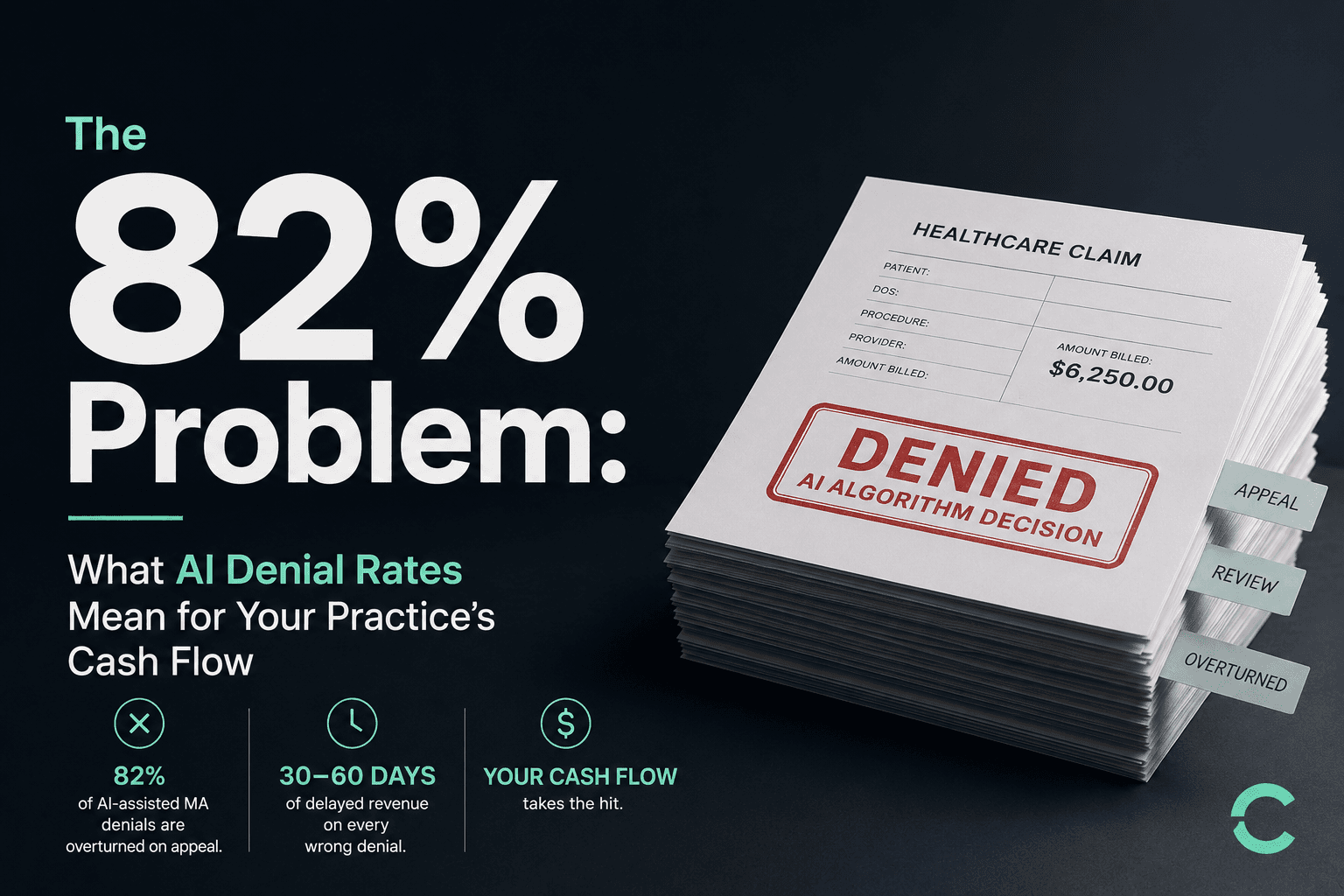
Insurance payment cycles have stretched longer, not shorter. Medicare Advantage plans, now covering nearly half of all Medicare beneficiaries, often take 45+ days to process claims. Commercial insurers aren't much better. And when a claim gets denied or pended for "additional documentation," you're not looking at a delay. You're looking at a cash flow crisis.
A recent industry analysis found that billing errors, insurance complexity, and documentation gaps are ballooning AR days for practices that don't have bulletproof front-end processes. One busy urgent care cut their AR by 20 days just by fixing charge capture errors before claims went out. But most practices don't have the bandwidth to audit every claim before submission.
What Happens When AR Piles Up
When your accounts receivable stretches past 45 days, the effects compound quickly:
Payroll stress. You start juggling payment dates or delaying vendor checks.
Growth stalls. You can't hire the new provider or expand hours because cash is tied up in pending claims.
Mistakes multiply. Under financial pressure, billing teams rush. Rushed billing creates more errors. More errors create more delays.
You take on expensive debt. Practice loans and lines of credit fill the gap, but they come with fixed payments regardless of your claim volume.
The 2026 benchmark for a well-managed practice is a first-pass denial rate below 5%. If yours is creeping above 8%, your billing operation isn't just inefficient. It's actively draining cash.
There's a Better Way
Healthcare receivables financing turns your pending insurance claims into working capital, usually within 24 hours. Instead of waiting on insurers, you get paid now. The financing company waits instead.
This isn't a loan. There's no fixed monthly payment, no personal guarantee, no lengthy underwriting process. The advance is secured by the claim itself. When the insurer pays, the financing company collects. You keep the difference.
For practices under $2 million in monthly revenue, this is often the only form of financing that makes sense. Traditional lenders want collateral, personal guarantees, and years of financials. They don't understand that a clean claim to a major insurer is one of the most reliable assets a practice has.
Who This Helps Most
Practices with 30+ days in AR
Groups expanding locations or adding providers
Practices that have outgrown their current billing operation but can't afford to scale it
Any practice where a single delayed payer would create a real problem
The Bottom Line
You didn't go into medicine to become a bank for insurance companies. Every day a claim sits unpaid, you're effectively lending money to a multi-billion-dollar insurer, interest-free.
Healthcare receivables financing gives you control over your cash flow again. It lets you make decisions based on what's good for the practice, not what's dictated by payer timelines.
If your AR is growing and your patience is shrinking, it's worth a conversation.
About Copay
Copay provides healthcare receivables financing for independent medical practices. We advance capital against submitted insurance claims so practices get paid now, not 30-60 days later. No debt. No patient involvement. Just faster access to money you have already earned.