The 82% Problem: What AI Denial Rates Mean for Your Practice's Cash Flow
Written by Emily Davis
The 82% Problem: What AI Denial Rates Mean for Your Practice's Cash Flow
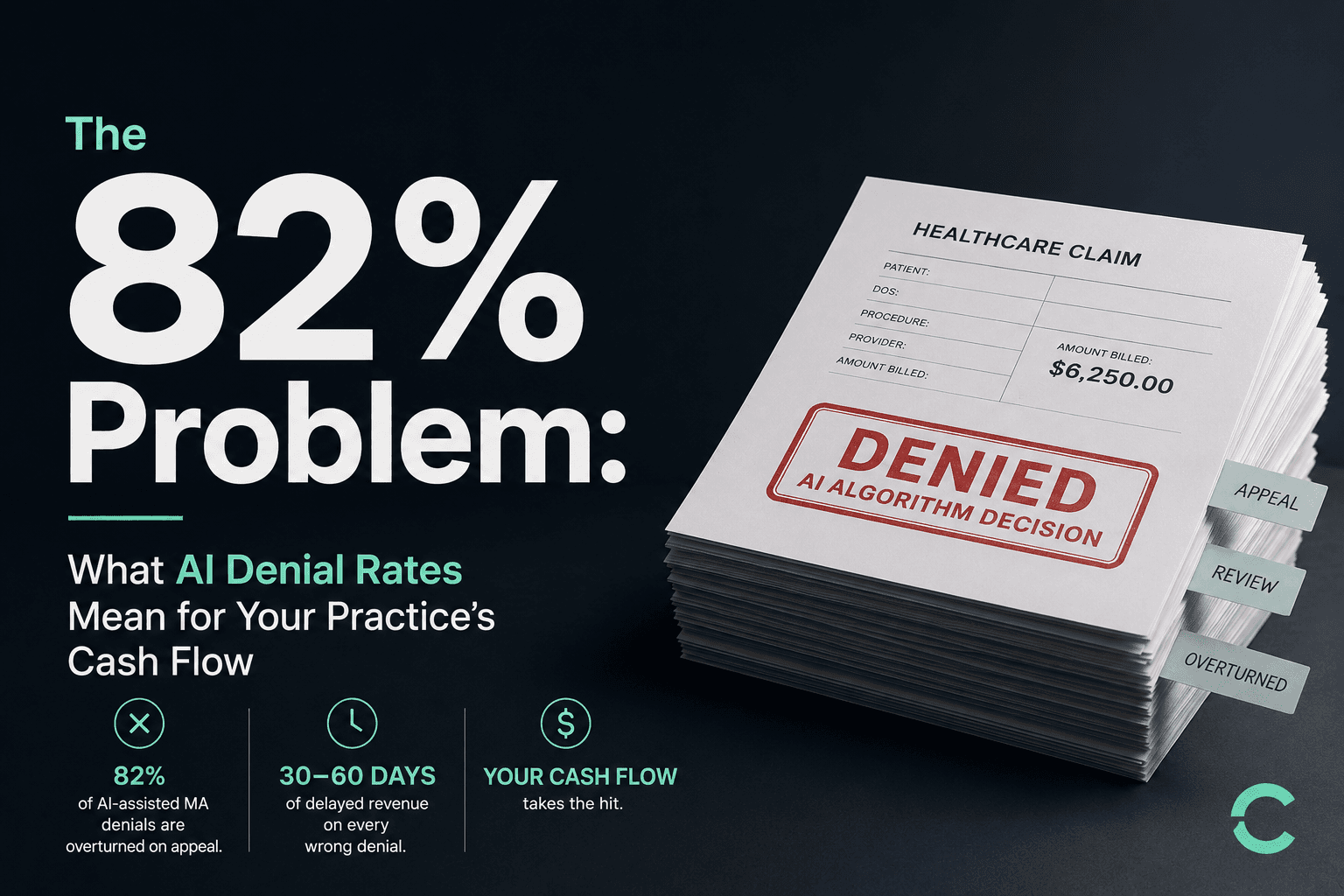
A new study published this month found that AI-assisted Medicare Advantage prior authorization denials are overturned on appeal approximately 82% of the time. Both Stanford University and Health Affairs published research in January 2026 confirming similar rates. The Medical Billers and Coders association put the number at 82% in their most recent analysis.
That is not a marginal error rate. That is a system that is wrong four times out of five and still operating at scale.
This post is about what that number means for independent practices in practical, cash-flow terms. Not the policy debate. Not the technology questions. The actual dollars and days that show up in your A/R when an AI denies a claim that should have been approved.
What 82% overturn rate actually means
An 82% overturn rate means the denial was incorrect. The care was appropriate. The documentation was sufficient. The patient met the criteria. The algorithm just said no.
For payers, this is not necessarily a bug. It is a feature of the economics. A denied claim that never gets appealed is pure margin. A denied claim that gets appealed and overturned still buys the payer 30 to 60 days of float. Either way, the payer wins.
The AI makes this process faster and cheaper for the payer. Same outcome, less human review, lower administrative cost. The speed is an improvement for the payer's bottom line. It is not an improvement for the practice's cash flow.
The math in your practice
Here is how this shows up in real numbers.
Assume your practice submits $300,000 in Medicare Advantage claims monthly. If your MA plans deny 15% of claims on first pass, that is $45,000 in denied claims every month.
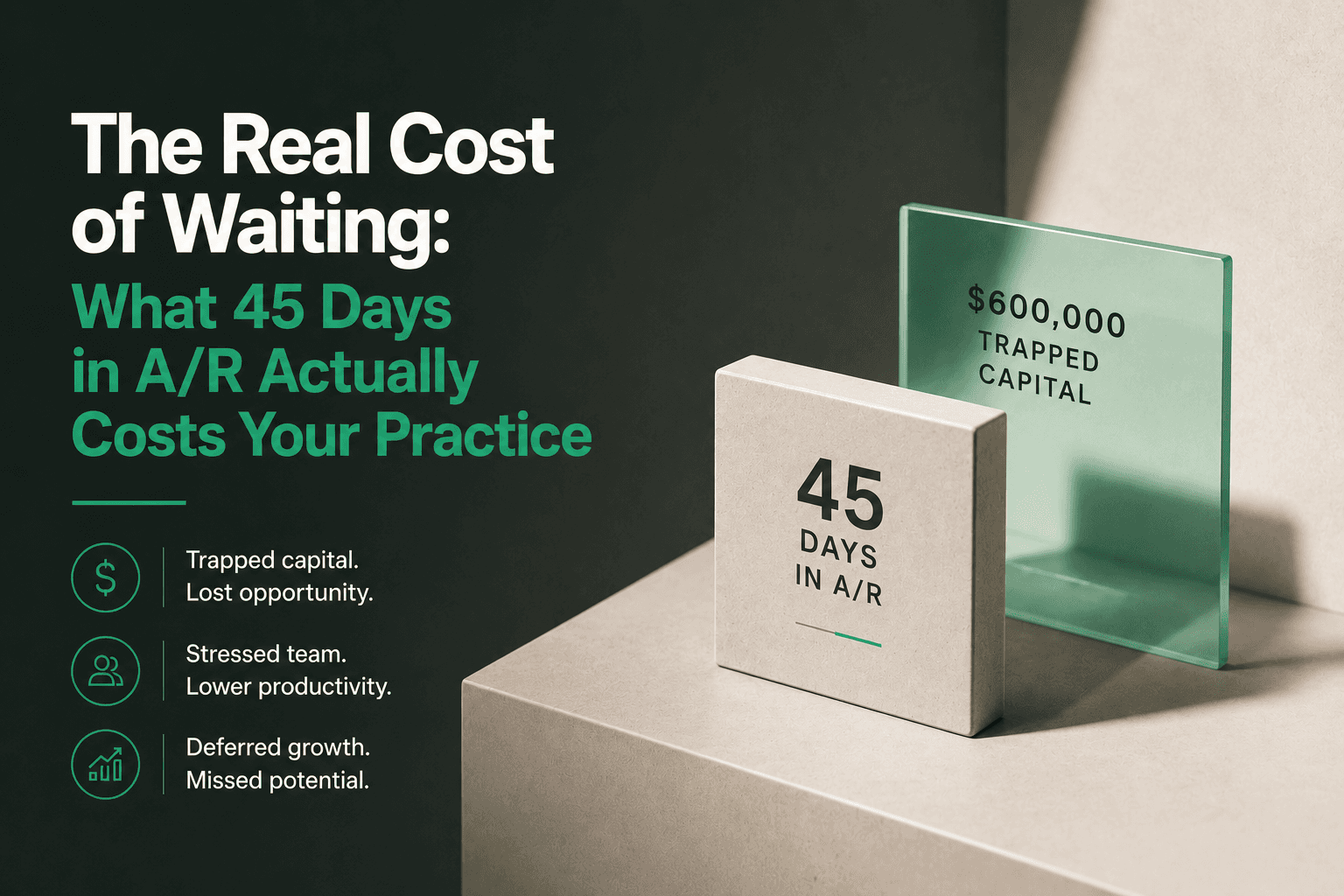
At an 82% overturn rate, $36,900 of those denials are wrong. If you appeal all of them and win at the average rate, you recover $36,900. But the appeal takes 45 days. The revenue arrives six weeks after you did the work.
If you do not appeal systematically, you recover only the claims your staff has time to fight. Maybe the big ones. Maybe the ones that are easy to document. The rest get written off. Your effective reimbursement drifts downward. You attribute it to "payer mix" or "tough quarter" and move on.
The hidden cost is not the denied amount. It is the delay.
The obvious cost of a denial is the denied revenue itself. But the bigger cost for most practices is timing.
Your payroll runs every two weeks. Your rent is due on the first. Your suppliers offer 2/10 net 30 terms that you miss because your cash is tied up in appeals. The $36,900 you will eventually recover does not help you make payroll this Friday.
This is why the 82% number matters beyond the appeals process. Even when you win, you win late. The cash flow gap is the real damage.
Why practices do not appeal more
The standard advice is "appeal more." That is correct but incomplete.
Appealing more requires staff time. A billing specialist spending 20% of their week on MA appeals is 20% not spent on clean claim submission, payment posting, or patient billing. In a practice with two billers, that is half a person's capacity.
The math on appeals usually works. $36,900 in recoverable denials per month, at an 82% success rate, justifies significant staff investment. But the math does not solve the cash flow problem while the appeals are pending.
This is the bind most practices are in. They know they should appeal more. They cannot afford the staff time. And even if they could, the recovered revenue arrives too late to solve the immediate cash flow pressure.
The AI expansion problem
CMS is currently piloting AI-driven prior authorization in traditional Medicare. Senate Democrats introduced resolutions last week to roll it back. The AMA found that only one in three physicians trusts payer reform promises.
None of this suggests the problem is getting smaller. If AI-driven prior auth expands from Medicare Advantage into traditional Medicare, the volume of algorithmic denials will increase. The 82% overturn rate will apply to a larger denominator. More practices will face the same cash flow squeeze.
The policy debate will continue. The pilot may expand or contract. But the cash flow reality in your practice exists today, on claims you already submitted.
What practices can do now
There are three layers to addressing this.
Layer 1: Appeal systematically.
The data is clear. Most denials are wrong. The practices that appeal systematically recover significantly more revenue than those that do not. This requires process, not just intent. A weekly denial review. Standardized appeal templates. Tracking by payer and by reason code. The first time you run this, the findings usually justify the effort immediately.
Layer 2: Compress your A/R timeline.
Even with perfect appeals, the revenue arrives late. The practices that have solved their cash flow problem separated the question of "when will the payer pay" from "when do I have access to capital."
Healthcare receivables financing advances capital against submitted claims. The claim is submitted. The advance happens the next day. The payer pays on their timeline. The advance reconciles. Your cash flow stabilizes while your billing team works the appeals on the back end.
At Copay, the rate is 0.75% for the first 10 days, with a daily rate after that, at the individual claim level. When the payer settles or the appeal resolves, the advance reconciles automatically. You paid a known cost to move capital forward in time while your team fixed the root cause.
Layer 3: Measure payer performance quarterly.
The practices that get ahead of this problem track it. Denial rate by payer. Appeal success rate by payer. Days to payment by payer. Effective reimbursement year over year. These numbers tell you where the damage is coming from and whether your fixes are working.
Most practices only look at aggregate A/R. Aggregate numbers hide the variation that matters. A payer-level breakdown almost always reveals that 80% of your cash flow pain comes from 20% of your payer mix.
The bottom line
An 82% AI denial overturn rate is not a technology glitch. It is a structural feature of a system that benefits from delay.
The practices taking damage from this are not the ones with bad documentation or inappropriate care. They are the ones that are too busy to appeal every denial, too thinly staffed to track payer performance, and too cash-constrained to wait 45 days for revenue they have already earned.
The fix is not waiting on policy change. The fix is treating your submitted claims as working capital you can access on your timeline, while your billing team systematically challenges the denials on the payer's timeline.
Your revenue is real. The work is done. The only question is when you get to use it.
About Copay
Copay provides healthcare receivables financing for independent medical practices. We advance capital against submitted insurance claims so practices get paid now, not 30-60 days later. No debt. No patient involvement. Just faster access to money you have already earned.